

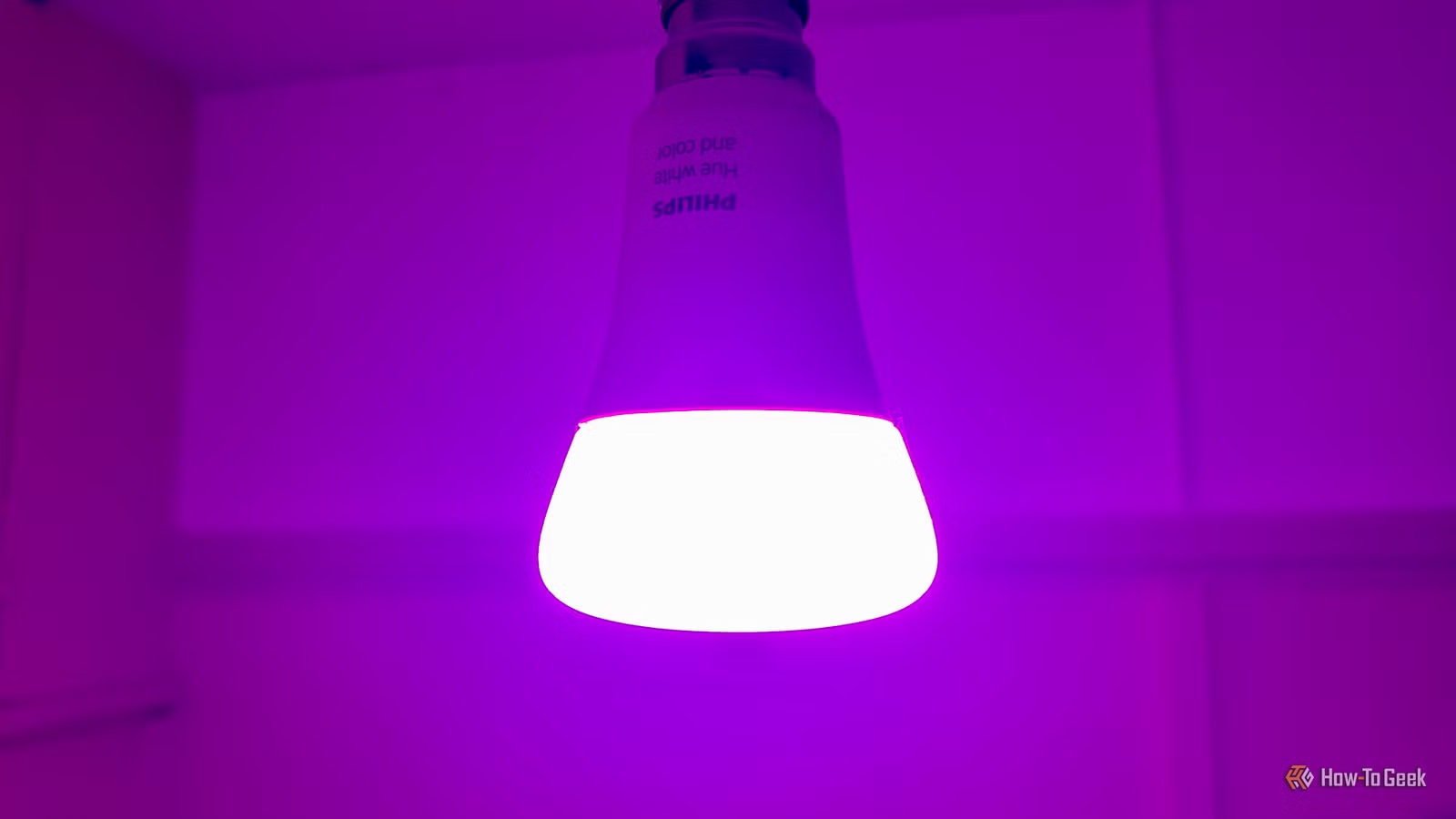
Like so many of you, the first “smart” home device I ever bought and installed was a Bluetooth-enabled RGB light bulb that came with an app. Now I could lie in bed and change the room’s color and light temperature to whatever I wanted, or set a time, so the light would wake me up in the morning.

Unlock Personalized Content &
Exclusive Features For Free
- Engage in discussions in Threads
- Follow and Like top authors, topics, and trends
- Browse with fewer ads across the site
- Personalize your profile to showcase your activity
- Get a content feed tailored to your interests
By creating an account, you agree to our Terms of Use and Privacy Policy. You also agree to receive our newsletters; you can unsubscribe any time.
Keep Reading
Log In
Forgot your password?
Create an account
Please provide your email address to finish creating your account.
Create An Account
*Required: 8 chars, 1 capital letter, 1 number
Create An Account Continue withGoogle Continue withOpenPass or Continue withEmail Continue
By creating an account, you agree to our Terms of Use and Privacy Policy. You also agree to receive our newsletters; you can unsubscribe any time.
Neat! But in the long run, this wasn’t a particularly impactful or useful purchase, and the more I think about it, the more it occurs to me that if you want to start off your home automation journey, a smart bulb is probably the wrong first step.
Smart bulbs are the most expensive way to smarten up a room
Is this really value for money?
One of the best things about light bulbs has always been that they’re relatively cheap. Of course, during the incandescent and even fluorescent bulb eras they needed to be replaced often. These days, a typical “dumb” LED bulb can work out to less than a buck apiece and won’t need replacing for years.
While a smart LED light might have a similar lifespan, the upfront cost is much higher. A basic smart LED bulb will run you around $10, which is a tenfold increase in price. Still not a lot of money though, right? Yeah, it’s fine if you’re changing out a single light in a bedroom or study, but once you start tallying up the total number of lights you’d have to replace in your whole home, that figure skyrockets.
Compare that to the cost of buying a smart switch to replace your normal on-off switch. Sure, you give up all the fancy color functionality, but you’re mainly going to be using lights on or off, with some dimming here and there, if we’re being realistic.
Which is why I think it makes more sense to buy a smart switch and make the power source of multiple lights smart, rather than giving each individual bulb a brain.
They break the most basic rule of lighting
The wall switch must stay on
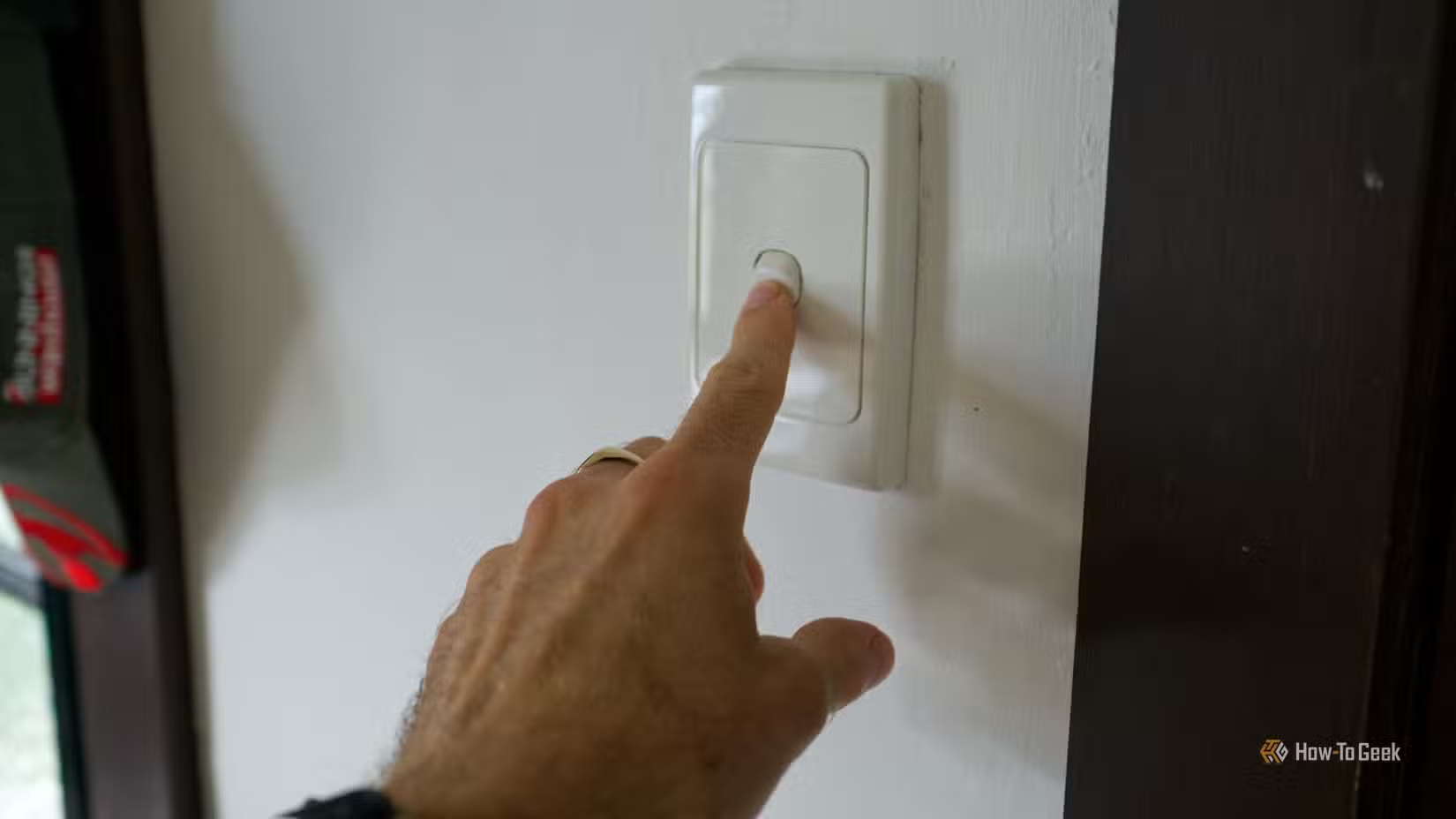
The most annoying part about smart bulbs is that, except for those with built-in batteries, the light switch has to physically stay on for the bulb to work. I mean, it’s common sense, but in practice it’s a pain in the rear. People can’t seem to get rid of the muscle memory where they flip off the light switch on the way out of the room. So when the time comes for your automation to kick in, or when you want to use a voice command to activate your lights, the thing is always offline.
It’s such an issue, that people have taken to putting those babyproofing light switch guards on to prevent the switches from being turned off. And I don’t just want to blame the other people in my home, I’ve done it myself while on autopilot all the time.
This is another problem that’s solved by using a smart switch, since the actual physical position of the switch isn’t relevant. You can always control it using automation.
Smart bulbs add complexity before you’ve experienced the benefits
Who had this bright idea?
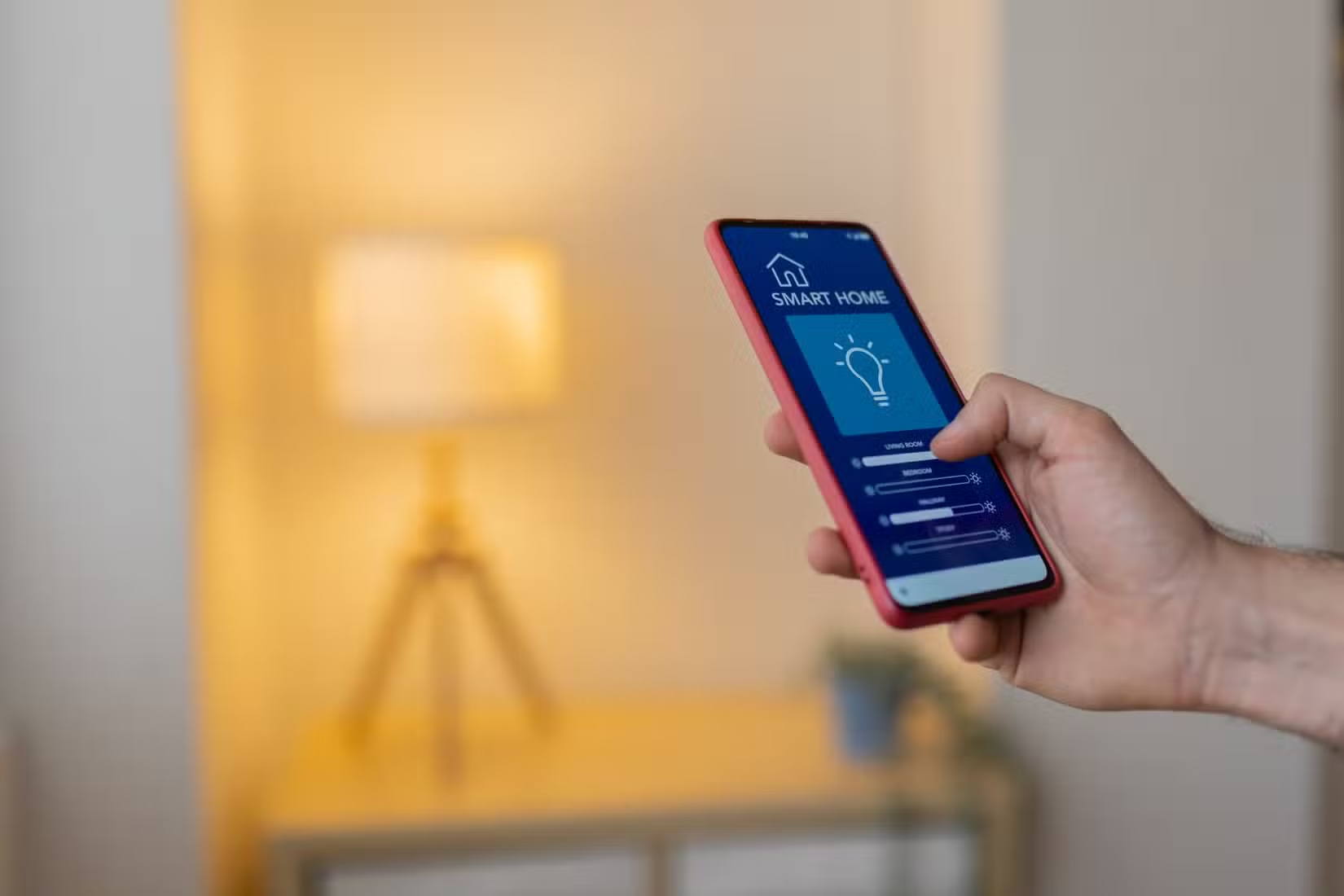
Call me crazy, but I think a smart home device should make things simpler for you out of the gate, and not more complicated. Sadly, there are few things as simple as a light bulb, and also few things as confusing as a smart light bulb.
For a first-time smart home device, I don’t think most people are going to walk away with a good impression when it comes to smart bulbs. The first one I ever bought just flashed on and off while I tried desperately to get an app to pair with it.
Of course, your mileage may vary when it comes to how well these bulbs work and how good the software is, but the better smart bulbs with good software are also more expensive than just $10 a pop, which means we run into the cost issue again.
I’m not saying that smart bulbs should be simpler, it would defeat the point! I’m just making the argument that they’re actually too fiddly and complicated to be someone’s first experience of smart home technology.
Smart switches are what most people actually needed all along
I guess this isn’t so much a “don’t buy smart bulbs” rant as it is a “smart switches are the first thing anyone should buy” rant. It’s not just smart switches either, smart plugs go in exactly the same category. Start off by taking control of your “dumb” equipment by automating the power supply.
Subscribe to the newsletter for smarter home-buying tips
Make better smart-home purchases—subscribe to the newsletter for clear buying guidance, head-to-head product comparisons, and practical setup tips that help you choose the right switches, plugs, and devices without wasting money. Get Updates By subscribing, you agree to receive newsletter and marketing emails, and accept our Terms of Use and Privacy Policy. You can unsubscribe anytime.
Best of all, if you do decide to get some smart bulbs later, they work better with smart switches, because you can ensure your smart bulbs actually have power regardless of what you or someone else accidentally does with the physical switch that controls that power. Getting your smart switches and plugs sorted out early also means ensuring they are all compatible and use the same software and standards. If you get smart plugs that also include an energy monitoring feature, that’s an even more practical and useful function right from the start. Far more desirable than RBG lighting.