

Home Assistant is incredibly powerful, and the core features allow you to do an enormous amount with your smart home devices. It’s not perfect, however, and there are some things that aren’t possible with the default features. There’s a very useful custom integration that lets it do even more.

Unlock Personalized Content &
Exclusive Features For Free
- Engage in discussions in Threads
- Follow and Like top authors, topics, and trends
- Browse with fewer ads across the site
- Personalize your profile to showcase your activity
- Get a content feed tailored to your interests
By creating an account, you agree to our Terms of Use and Privacy Policy. You also agree to receive our newsletters; you can unsubscribe any time.
Keep Reading
Log In
Forgot your password?
Create an account
Please provide your email address to finish creating your account.
Create An Account
*Required: 8 chars, 1 capital letter, 1 number
Create An Account Continue withGoogle Continue withOpenPass or Continue withEmail Continue
By creating an account, you agree to our Terms of Use and Privacy Policy. You also agree to receive our newsletters; you can unsubscribe any time.
Spook is the integration you never knew you needed
A powerful toolkit for Home Assistant
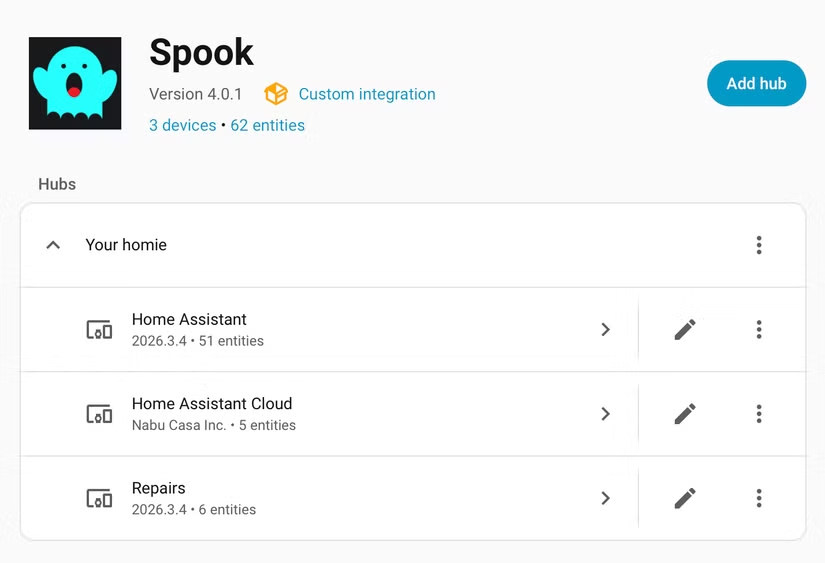
Spook is a custom integration that adds a whole range of additional features to Home Assistant. It’s essentially a toolbox that gives Home Assistant extra functionality you don’t get by default.
The name comes from the fact that you can use Spook to quickly find ghost entities in Home Assistant that are no longer used by automations or connected to integrations. However, there’s a lot more that Spook can do. You may install it for one specific purpose and then discover a whole world of useful tools you didn’t realize you couldn’t live without.
Before you start to panic, this isn’t some vibe-coded integration that’s been thrown together by someone with an idea but no clue. Spook is the work of the legendary Franck Nijhof (better known as Frenck), who is one of the core developers of Home Assistant.
Spook exists outside of Home Assistant's rules
Covering gaps the core software doesn't
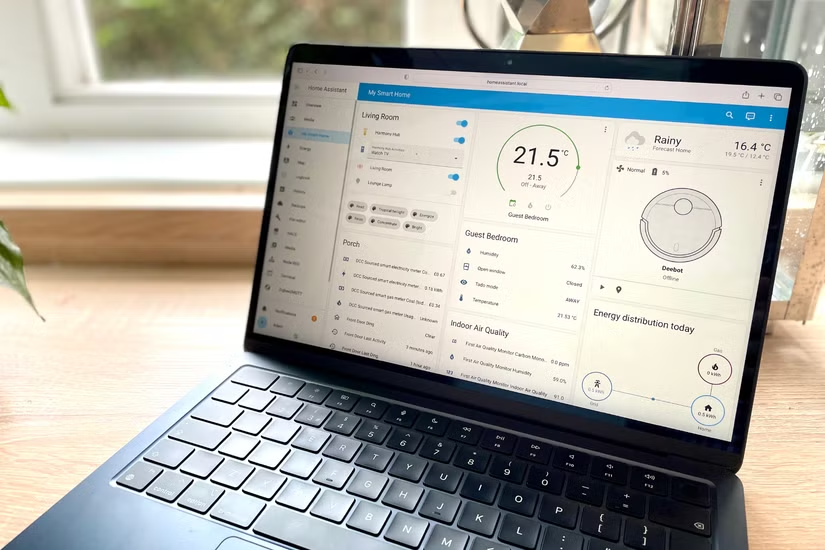
Home Assistant’s developers have a responsibility to ensure that their software is as rock-solid as possible. People are trusting Home Assistant to control their smart homes 24/7, so the developers can’t afford to add niche features or workarounds that don’t follow the project’s core design principles.
Since Spook is a custom integration that you can install at your own risk, it doesn’t have the same restrictions. This means Spook can do things that are incredibly useful but could also break things if used incorrectly.
For example, Spook can modify system registries to remove orphaned entities, rename entities using automations, or even import data into the Home Assistant history. These are things that aren’t possible with the core software, which understandably restricts what you can actively modify.
These aren’t dubious hacks or clunky workarounds. Spook simply adds features that extend what’s possible with the core software.
By Adam Davidson
The automations that Spook unlocks
Do more with Home Assistant
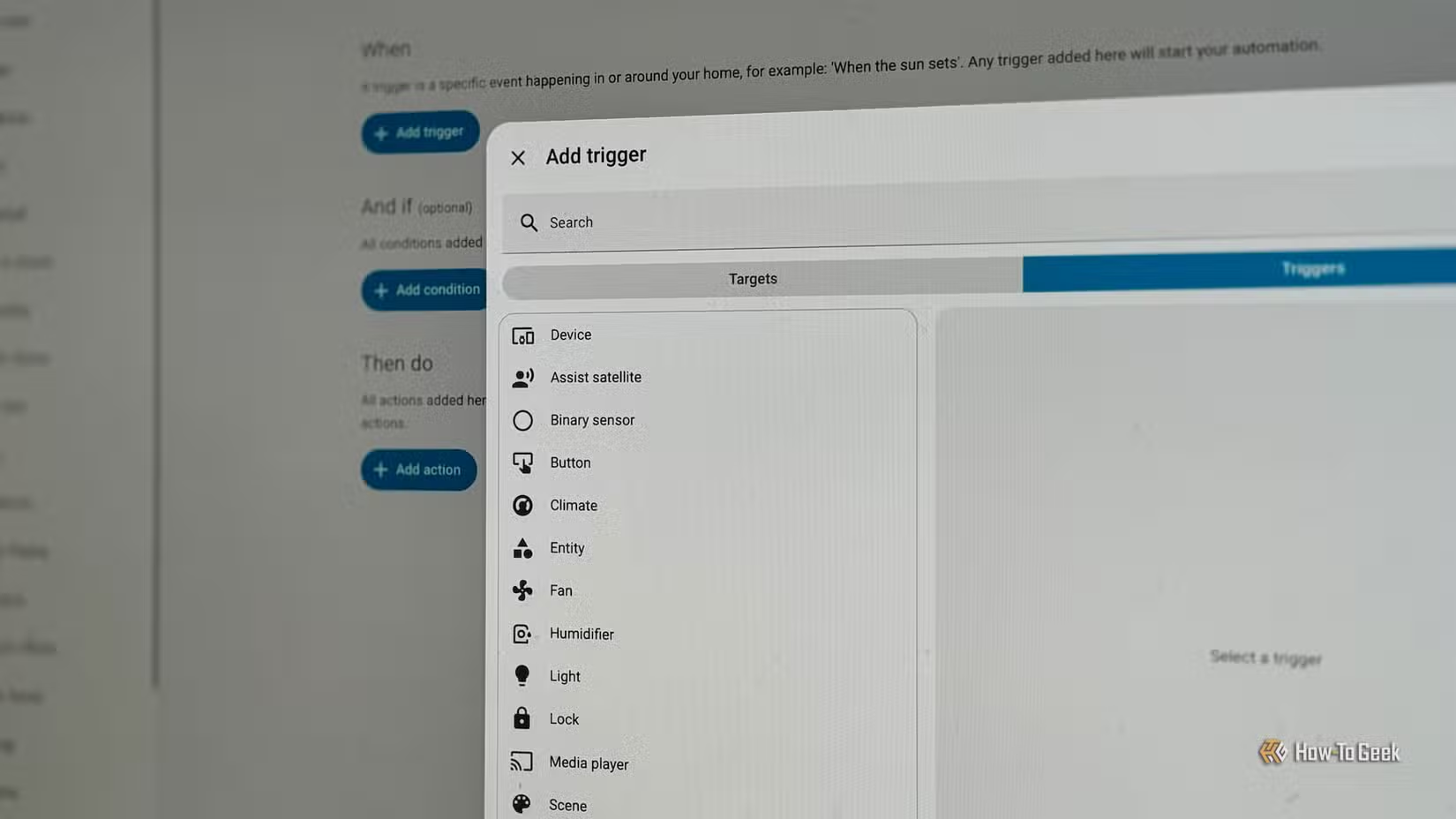
Using Spook, it’s possible to create Home Assistant automations that simply won’t work using standard Home Assistant software alone. It allows you to do even more with Home Assistant.
For example, if you have an integration that polls an API that has rate limits, you may not want that integration to run all the time. There’s no native way to stop an integration from polling via an automation, but with Spook, you can use the homeassistant.disable_polling action to do exactly that.
Another useful automation you can create with Spook is one that sends you an alert when an integration crashes or there’s some other kind of internal error. By default, Home Assistant will surface these as persistent notifications in the UI, but there’s no native way to have these notifications trigger an automation. With the sensor.persistent_notifications entity in Spook, an automation can trigger when the count of notifications increases and forward the text from the error message as a critical notification to your phone.
One of the most useful ways to use Spook is for regular spring cleaning of your entities. You can set up an automation to run on a schedule that will look for any orphaned entities that are no longer serving any purpose and delete them all automatically. You’ll never have ghosts haunting your Home Assistant instance again.
How to install Spook
You can find it in the HACS repository
Installing Spook is simple enough to do, as it’s available through the Home Assistant Community Store (HACS). As long as you have HACS installed in Home Assistant, you can search for Spook in the main HACS page.
Download Spook, then restart Home Assistant. Once it’s back up, go to Settings > Devices & services, and click the Add Integration button. Search for Spook and select it to install it.
Once you’ve installed it, the new services and functionality become available to you. It’s worth checking Spook’s documentation to see which tools are relevant to your setup. If Home Assistant is missing a capability you need, Spook may have you covered.
You should remember that Spook is an unofficial custom integration, so you use it at your own risk. It is capable of making changes that may break things if you use it incorrectly. However, I’ve been using Spook for some time, and I’ve never had any issues with it causing things to go wrong. It’s been nothing but incredibly useful.
Spook can make Home Assistant even more powerful
If you’re new to Home Assistant, there are plenty of native Home Assistant features to explore. However, if you’ve been using it for a while, Spook can give you a whole new set of tools that enable you to do even more with your smart home.
Подробиці можна знайти на сайті: www.howtogeek.com